
• Welcome to WV! We are the strongest, multi-divisional army. We have soldiers from all over the world and we need YOU! Join our Discord and represent your continent on the battlefield! You'll be part of the most legendary organization in Club Penguin History. FEAR THE WAVE! ~Water Vikings Leaders

El Dia de Muertos: una celebración donde la muerte no significa el final.

¡Hail, mis Vikingos!

Espero que el Valhalla los esté tratando de maravilla después de tantas batallas. Estas fechas han estado cargadas de misterio y escalofríos, especialmente porque apenas acabamos de salir de Halloween. Sin embargo, no todo lo que rodea a la muerte tiene que ser oscuro, aterrador o siniestro. A veces, incluso en medio de la oscuridad más profunda, puede surgir una luz capaz de iluminar hasta los recuerdos más lejanos. Y es precisamente de esa luz de donde nace una de las tradiciones más hermosas, significativas y simbólicas de México: el famoso Día de Muertos.

Pero ¿qué es realmente el Día de Muertos? Celebrado cada 1 y 2 de noviembre. Pónganse cómodos, mis Vikingos, porque hoy dejaremos atrás los campos de batalla y nos adentraremos en los coloridos panteones y barrios de México, donde nos espera una historia muy especial.

Junto con su familia, Miguel construye un hermoso altar decorado con manteles, flores naranjas y moradas, fotografías, velas y algunos objetos especiales. Coloca un poco de pan, el favorito de su abuelo, mientras su hermana María añade unos collares de perlas que solía utilizar su abuelita. Y es que esa es una de las partes más bonitas de esta tradición: colocar alimentos, fotografías y pertenencias que nuestros seres queridos disfrutaban en vida. Es una manera de sentirlos cerca, como si por un instante el tiempo se detuviera y pudieran visitarnos una vez más.
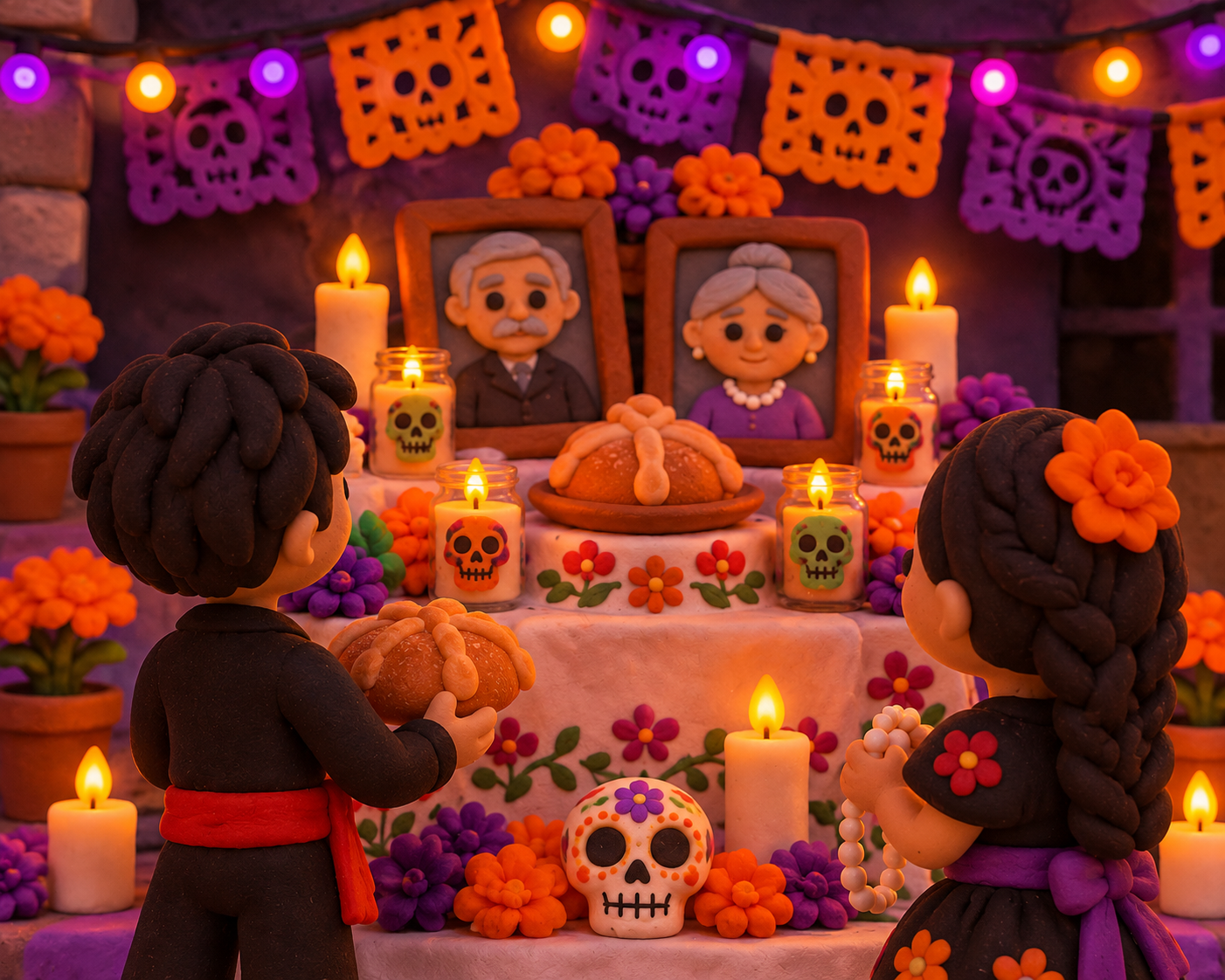
Pero la celebración no termina en casa. Los panteones se llenan de flores, velas y luces de colores. La música invade los alrededores, las familias decoran las tumbas y los recuerdos cobran vida. Miguel y María también se pintan el rostro como Catrinas, utilizando maquillaje de calavera y elegantes vestimentas tradicionales mexicanas. Después de recorrer el panteón, ambos disfrutan de unos deliciosos tamales y del tradicional Pan de Muerto, un pan dulce cubierto de azúcar y decorado con pequeñas figuras de masa que representan huesitos.

Y así, mis Vikingos, descubrimos que el Día de Muertos no es una celebración para lamentar la ausencia, sino para honrar las vidas de quienes dejaron una huella imborrable en nuestros corazones. Porque mientras exista un recuerdo, nadie desaparece por completo.

¡Esto no es un adiós, es un hasta luego!


———

Hail, my Vikings!

I hope Valhalla is treating you wonderfully after so many battles. These days have been full of mystery and chills, especially because Halloween just passed. Although, not everything that involves death needs to be dark, terrifying or sinister. Sometimes, even in the darkest of times, a light can come along that illuminates even the farthest memory. It’s precisely from that light where one of the most beautiful, meaningful and symbolic traditions in Mexico is born: the famous Day of the Dead.

But, what really is the Day of the Dead which is celebrated every 1st and 2nd of November? Get comfortable, my Vikings, because today we will set aside the battles and we will journey into colorful graveyards and neighborhoods in Mexico, where a very special story awaits.

Together with his family, Miguel puts together a beautiful altar decorated with table cloths, orange and purple flowers, photographs, candles and some special items. He places some bread, his grandfathers favorite, whilst his sister María adds a pearl necklace that their grandmother used to wear. And this is one of the most beautiful parts of this tradition: putting food, photos and belongings that our loved ones used to enjoy in life. It’s a way to feel them close, as if for one instant time stops and they could visit us once more.

But that celebration doesn’t limit itself to our homes. The graveyards are filled with flowers, candles and colorful lights. Music plays in the surrounding areas, families decorate the graves and memories come to life. Miguel and María also dress up as Catrinas, with skeleton makeup and traditional Mexican clothing. After going to the graveyard, both enjoy delicious tamales and the traditional Pan de Muerto (Bread of the Dead), a sweet bread covered in sugar and decorated with small dough figures that represent bones

And with that, my Vikings, we find out that Day of the Dead isn’t a day to mourn our losses, but honor the lives of whoever left a huge mark in our hearts. Because as long as a memory exists, nobody disappears forever.

This isn’t a goodbye, it’s a see you later!


Escrito por/Written by: Snow ༄ Viking Warrior

Traducción por/Translation by: Emjay ༄ Viking Chief

Leave a Reply

Your email address will not be published. Required fields are marked *